
The Commute
Which is mostly about The Manuscript

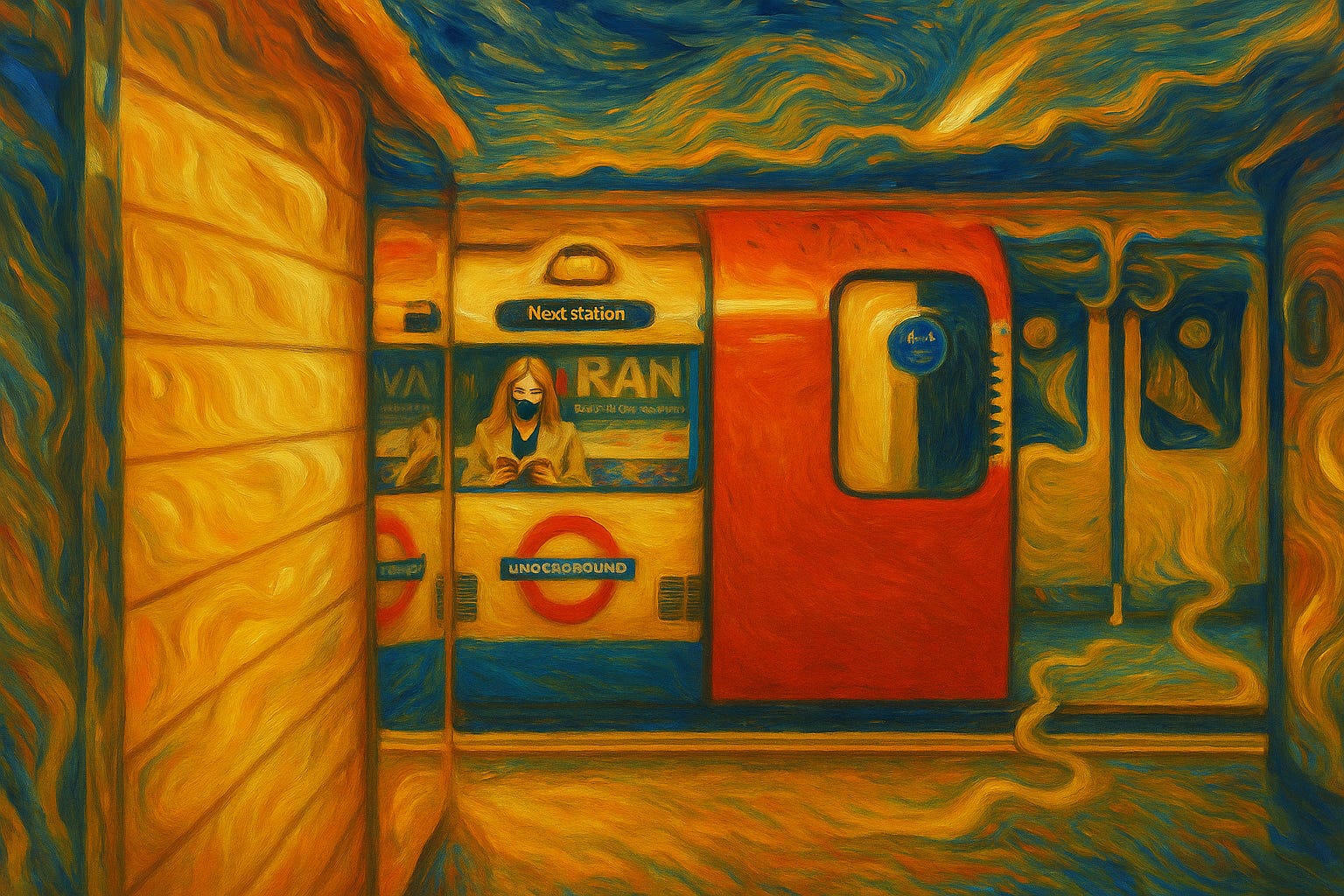
The station is buzzy. It’s no Waterloo or King’s Cross, but it’s busy for what it is—a station in an utilitarian English outpost outside of the fringes of the London suburbia. I always try and get the 07:31 am to the city. That’s the last train where as a morning commuter I might find a place to sit. Among the young mothers and their Michael Kors purses. And the banking executives in their crisp white shirts and Patagonia gillets who have clearly mastered the art of looking competent before 8 AM.
Anything after the 07:31 and I’ll find myself leaning for support on the colourful poles that are always sticky with something. Thameslink is for the everyman. Great Northern is too, but it has more stops and takes longer to get into London, so it shoulders fewer passengers. I weigh my preferences.
I’m always thinking of The Manuscript. From the time I wake up and get dressed to the time I’m picked up and driven back home from the station (when I can finally fire up my laptop and pretend I'm Virginia Woolf rather than someone who spent her commute mentally rewriting conversations from 2007). This manuscript is not my first. But it is the one I have finished. The city and its ingredients stick to me, but I shake them off as the key on the keyboard clacks against my fingers. One sentence. Two sentences. Three chapters.
Each morning, I position myself before the open refrigerator. To retrieve my meal-prepped bento box, but also to stare at the watermelon I'll devour after surviving another day of capitalism. Briefly stare. I am dropped off near the steps up to the ticket hall. The drop off is easy. I say a quick goodbye to my husband who knows I’m thinking of the manuscript and he's learned not to ask about dinner plans when I'm clearly orchestrating imaginary lives more interesting than our own.
I think of the manuscript as I run up the flight of stairs to the ticket hall. Actually, no. I don’t run up anything if I don’t have to. I walk up. I spot familiar faces who share my sardine-tin experience. The smell of cheap coffee from the food store hits me. They have the kind of ice tea I like. Also, the pork scratchings I like, when I feel rebellious, which is approximately whenever I remember I’m an adult with free will.
I am then greeted with the smell of posh coffee from the Costa that’s the size of small cupboard. An upright coffin with bright lights and pretty posters. That is the coffee I covet, but I’m pinching pennies so I will whatever is available from the office pantry later. I make my way to the platform. Platform 2. The checkers at the machines know me. They glance elsewhere when I scan my pass. They’re saying Yes, we see you, fellow cog in the commuter machine. We know you’re not going to jump over the ticket barrier. Or stand around cluelessly like one of those tourists. I imagine they say that. They know I’m a regular. I relish being a regular, which reveals exactly how low my bar for achievement has sunk.
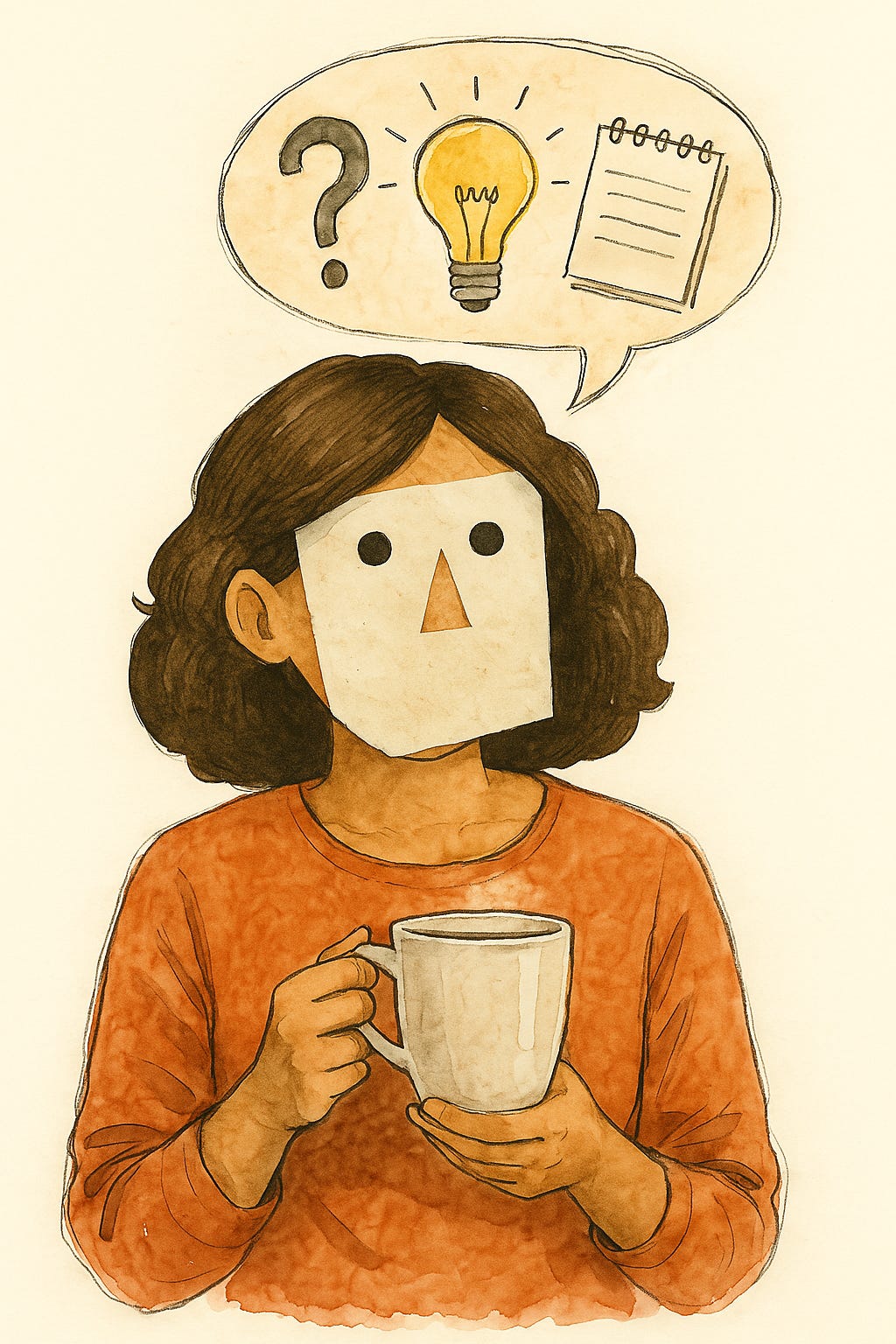
The mundaneness of my routine disgusts me. But only for a moment. Because aboard the train, wedged between a gentleman whose cologne could revive the recently deceased and the window, I find a chance to weaponize my journey for art.
This man, I think, stealing a glance at his profile, could be a character in a short story. Perhaps he is Head of Accounts somewhere insufferably stuffy, a serial cheater which he hides from his nurse wife and two children. Maybe he irons his own white shirts and the cologne was a birthday gift from his mum. The woman sitting opposite to me is pale, has the thinnest arms and the curliest hair and doesn’t look up from her phone. She could be his mistress in this narrative and she shall be called Marjorie.
Finsbury Park. St Pancras. Farringdon. Signal failure ahead. Delay. Message Office Manager.
My desperate need to get to my manuscript is overshadowed by the haunting spectre of previous literary failure. I had started writing an entirely different novel in my early twenties. Over fifteen years ago, when my optimism was still a renewable resource. I had a plan. A story. Somewhat of an outline.
All my writing friends from high school—fierce compatriots and competitors, who were always battling with me every year to win the editorship of the school paper—had pursued journalism. They had chosen a field which would keep them closest to the act of writing.
But I hadn't.
I had chosen STEM, engineering, the siren call of financial security, high-stress pathways. While drowning in post-graduate coursework, I squeezed out time to blog and maintain a part-time column in the Nottingham Post as a restaurant critic—though calling it "criticism" is generous, considering my inaugural review was of Beeston Road Kebab and Balti, which was something and received a lot of angry feedback from readers who were not impressed. But my fervour to write a novel fizzled.
Years later, single, taken, single again, suddenly married, a few short stories and essays in literary magazines, and I made another attempt. Which also dissolved into the gaping maw of performative normalcy.
But now! Now is a different time and as I sit next to this cologne-drenched man imagining him wrapped around this phone-absorbed woman, I am desperate to get to chapter thirteen, line forty one, just to make sure my protagonist says something profound, that readers might quote someday.
Elizabeth Line beckons and I have ten minutes to dissociate from The Manuscript before being engulfed by concrete sentinels of Canary Wharf.