
How I Work With Beta Readers
Lessons in keeping my ego in check

I think I should the title of the post to How I'm Trying to Work With Beta Readers.
Aeons ago I wrote somewhat of a how-to on working with beta readers to sell more books. I was working with new writers (on the side of my day job) on marketing and it felt cute. The Writing Cooperative took a chance on me then and you can read it here. It was, functional (maybe too much) and to-the-point.
Copying and pasting “The End” on Draft 5 of my novel came with mild fear because I knew it was time to look for beta readers. I am proud to say that I have never been afraid of feedback on my writing. I thrive on it. Which can come across as annoying to many fellow writers, I know. But it doesn’t exclude me from nerves that take over while waiting to receive said feedback.
For the uninitiated, Beta Readers are those brave souls who agree to read your manuscript before it has been scrubbed clean of its most embarrassing cliches and plastic dialogue. They are the first humans to see at least a polished version of the “horse-shit draft” that you’ve been cultivating in the dark like a neurotic miser.
What do I have to fix? Where have I gone wrong? Do I have to rewrite it all? How much hate is this character going to get? Are the themes coming across as I want them to or not? These questions plague (and lead to hair loss) and over the years of having beta readers read my stories, there are a few things I’ve rendered concrete a very specific, somewhat masochistic method for working with them. If you’re a writer who enjoys defending your artistic choices until you’re blue in the face, you’re going to hate this.
This is not going to be, by any means, an exhaustive guide. Just one that has worked for me, and I hope works for you too.
The Silent Defendant
My philosophy has been simple: The beta reader is not to be argued with.
Yes, even when they’re wrong and even when they may not have understood a scene or a beat or a theme or what have you.
When I send out a draft (and this is almost always either the second or third, never the first), I’m not looking for a debate. I’m not looking for a “conversation” about why my protagonist chose to say those specific words in Chapter Four. I try and treat my beta readers as a mock sampling of the final audience.
If a reader says, “I didn’t understand why the Butcher looked at her like that,” I refrain from sending back a long comment or a three-page email explaining the nuance of Turkish cultural stares. I refrain from pointing to the foreshadowing on page twelve. No arguments.
Why?
Because when this book hits a shelf (if it ever does), I won’t be tucked into the jacket flap ready to jump out and explain my intentions to the person reading it on their commute. If the reader didn’t get it, the manuscript failed, not the reader. I stare at the feedback until my eyes glaze over under the pressure of imaginary rewrites, and then I decide: do I fix the prose, scene, dialogue what have you or do I accept that this specific reader just wasn’t “my” people?
If the feedback left is incomprehensible or madly irrelevant, then one or two further questions are fair, I feel. But for the rest, there is no discussion. There is no back and forth.
I Build, You Inspect
The second philosophy (can I say rule? Let’s stick with philosophy…) I follow is: I build, you inspect.
I’m always conscious of asking beta readers about how to fix my story or how to write a character or how to edit a scene. This stems from an abysmal history of losing my voice trying to edit according to beta readers, that I put my short stories through. So many of those stories ended up sounding like other people’s babies.
I’m refraining—which is hard— from asking my readers for suggestions on how to “fix” a scene. I don’t ask, “Should David die of the Cough, or should he just ghost her?” or “What would be a funnier way to describe this commute?” or a very generic “How can improve this scene?”.
The moment a reader is asked for suggestion to fix your work, you’ve allowed them to work on your blueprint. Given that a lot of beta readers are writers themselves, their solutions, no matter how delicious, will always be a product of their own voice. Or how they themselves would write the story.
I don’t know about you, but that is precisely what I don’t want.
If a plot beat feels flat, I want my beta readers to to tell me it’s flat. The solution, however, remains my burden to bear in the lonely, coffee-stained hours of the night. Tell me what’s wrong, don’t tell me how to fix it. I build, you inspect.
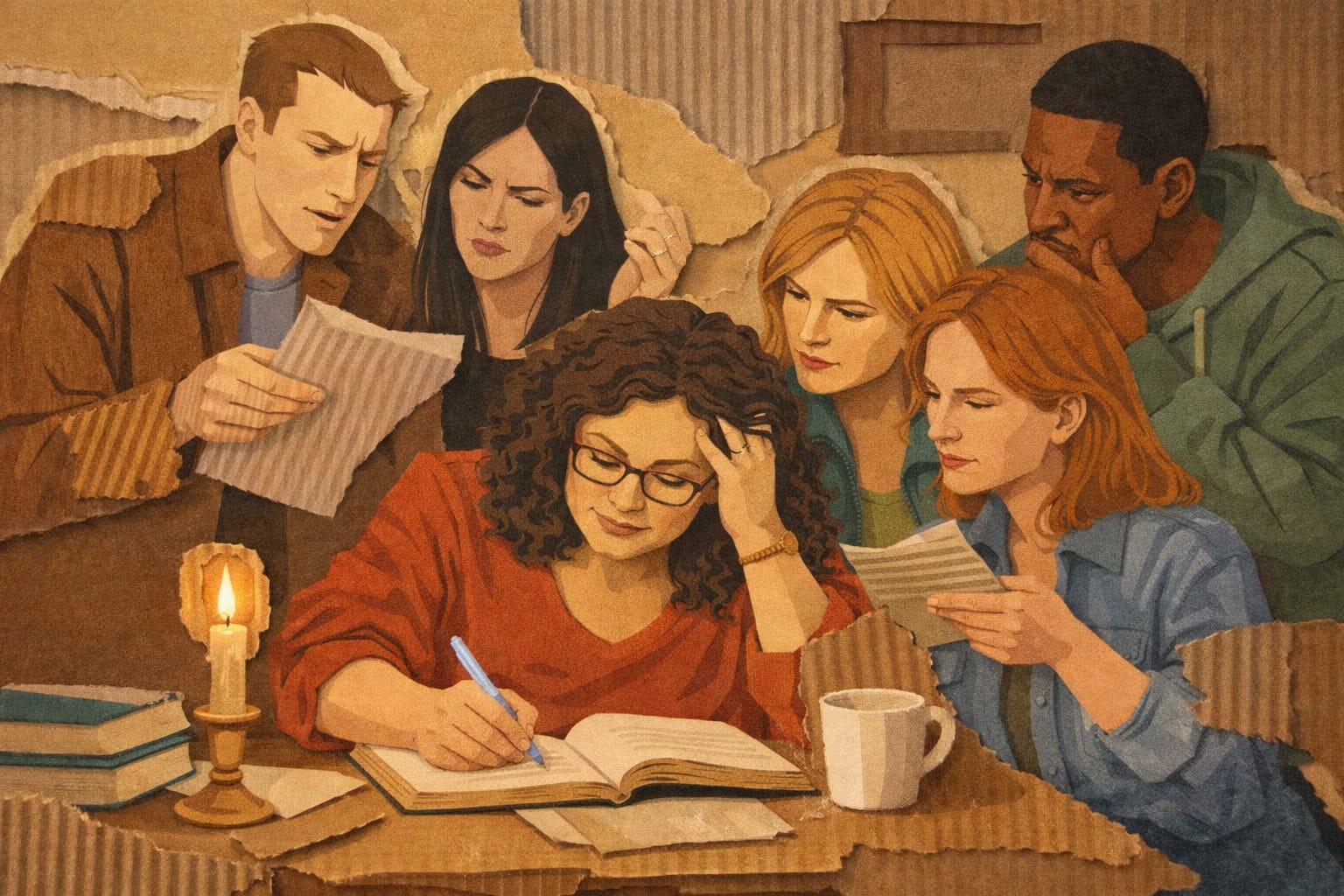
Permission to Kill
I hate the phrase “constructive criticism”.
Well, hate is a strong word and I know my definition of it will never not be debated. But I find that any criticism that is relevant and true is helpful, irrespective of how it is delivered. My brother would say, “That is very second generation SE Asian immigrant of you.”
Working with beta readers is a particular form of intimacy. It’s handing over a piece of your soul and saying, “Please tell me all the ways this doesn’t work, but also please don’t hurt my feelings too badly because I haven’t had enough sleep.” It’s terrifying. It’s absurd. The idea that they may not like it is wounding. The idea that you will be hearing about it, is death.
Diplomatic feedback, I find, is like a meal deal from Tesco—it’s labelled a “meal” and feels like a meal while you’re eating it, but you’re starving again ten minutes later. I treat plainly honest feedback as a diagnostic tool. It’s the thud of the literary cleaver telling you exactly where the bone of the piece is. My readers are wishy-washy when they are protecting your feelings. The ones that leave harsh-but-relevant comments are the ones protecting my work. You get to decide which one you value more.
Of course, I will never force others to think of criticism the same way. But giving my readers permission to kill and then wading through sharply toned honest criticism has been the most effective way for me to improve.
Tips for the Fragile and the Brave
Don’t loose your mind, just:
Curate your jury: Don’t just send it to your mum. Unless your mum is a ruthless editor of fiction or whatever genre you’re writing in, who enjoys crushed dreams for breakfast, her feedback will be “It’s lovely, dear,” which is the most useless sentence in the English language. Pick people who actually read (and maybe even write in) your genre.
Ask specific questions: Instead of asking “Is it good?”, ask specific, sensory questions. “At what point did you want to stop reading?” “Which character made you want to throw the book across the room?” “Did the smell of the butcher shop make you hungry or nauseous?”
Find the common factor: If one person says a scene is boring, it might just be them. If three people say it’s boring, you now have a a systemic issue that requires fixing. This applies to your favourite sentences (no matter how long it took you to perfectly compose it, if it confuses multiple readers, you know what to do), and your favourite characters and metaphors and similes even.
Remember that there is no Board of Directors: You are the final authority. If a beta reader suggests you turn your gritty diaspora drama into a YA Rom-Com involving vampires, thank them politely and then promptly remove that comment from your memory.
Thank the “mean” ones: The reader who gave you the most brutal feedback is usually the one who spent the most time thinking about your work. They did the heavy lifting. Thank them specifically.
All of that, sans lengthy explanations, arguments or long-winded justifications.
Writing is a lonely act, but improving is a communal struggle. Learning to love the truths about my work is a necessary process I put myself through in the hopes of being on my way to a half-civilized manuscript.
Bonus
Some questions you might ask your beta readers:
At what point did you put down the story after you started?
What are the story’s strengths?
What are the story’s weaknesses?
Which parts of the story resonated with you?
Is the story’s climax believable and worth reading the book?
Did any parts feel rushed? Did any parts drag?
Are there any spots you became less excited about reading?
Is the book too long? Too short?
What is your favourite part of the story?
Who is your favourite character? Least favourite? Why?
Are there any aspects about the setting/characters/XYZ that were confusing?
What is your opinion on the quality of the book’s writing?
Does this story remind you of anything you’ve read before? (A great question if you’re hunting for comparative titles!)
Happy writing!
Amrita
Follow along with my eating, cooking and writing adventures here, where I promise to document both the triumphs and the failures.